Inert atmosphere
Nitrogen or argon replaces normal process air where required.
Protected Mechanical Grinding
Mechanical fine grinding in a controlled nitrogen or argon atmosphere for sensitive powders requiring a protected and sealed processing route.
Process Overview
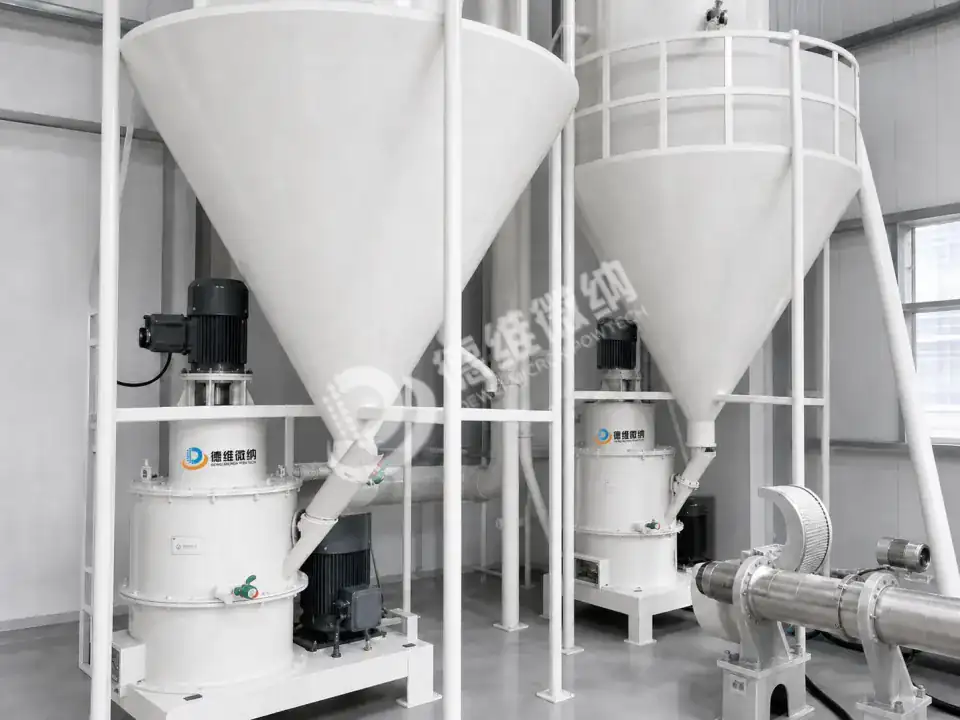
This route combines a mechanical mill with inert-gas circulation, oxygen monitoring, sealed feeding and discharge, filtration, pressure control, and safety interlocks. It is considered when a mechanical grinding mechanism is suitable but exposure to air is not.
Final configuration is determined from representative powder data, required product quality, throughput, operating environment, and safety information.
Each item is reviewed against the real powder and acceptance criteria.
Nitrogen or argon replaces normal process air where required.
Rotor configuration is matched to hardness and fracture behavior.
Monitoring and control logic maintain the defined low-oxygen operating range.
Sealed discharge reduces air ingress and uncontrolled dust release.
The circulation and filtration system is designed for stable safe operation.
Material safety data and testing are required before final configuration.
Oxidation-sensitive chemicals, reactive powders, selected metal powders, carbon materials, and combustible dust applications suited to mechanical grinding.
Application examples are not a guarantee for an untested powder. Chemical compatibility, dust risk, and required product properties must be confirmed first.
Send the material name, SDS, feed PSD, target D50/D90/D97, capacity, impurity limits, temperature limit, and atmosphere requirements.
Submit Material Data| Factor | Typical Requirement | Engineering Note |
|---|---|---|
| Grinding mode | Mechanical impact / shear | Rotor selected by material |
| Protective gas | Nitrogen or argon | Risk assessment required |
| Safety controls | O₂, pressure, interlocks | Project-specific limits |
| Sizing data | PSD, capacity, safety data | Testing strongly recommended |
The preferred route depends on target size, material fracture, capacity, purity, gas consumption, and temperature limits.
No. Gas selection follows material chemistry, process safety information, and product-quality requirements.
Provide an SDS and available dust explosion, ignition, oxidation, or moisture-sensitivity data before testing or design.
Testing helps establish achievable particle size, capacity trend, collection behavior, contamination risk, and the correct system boundary before production selection.
Scan to add WeChat
 Scan with your phone to start a chat