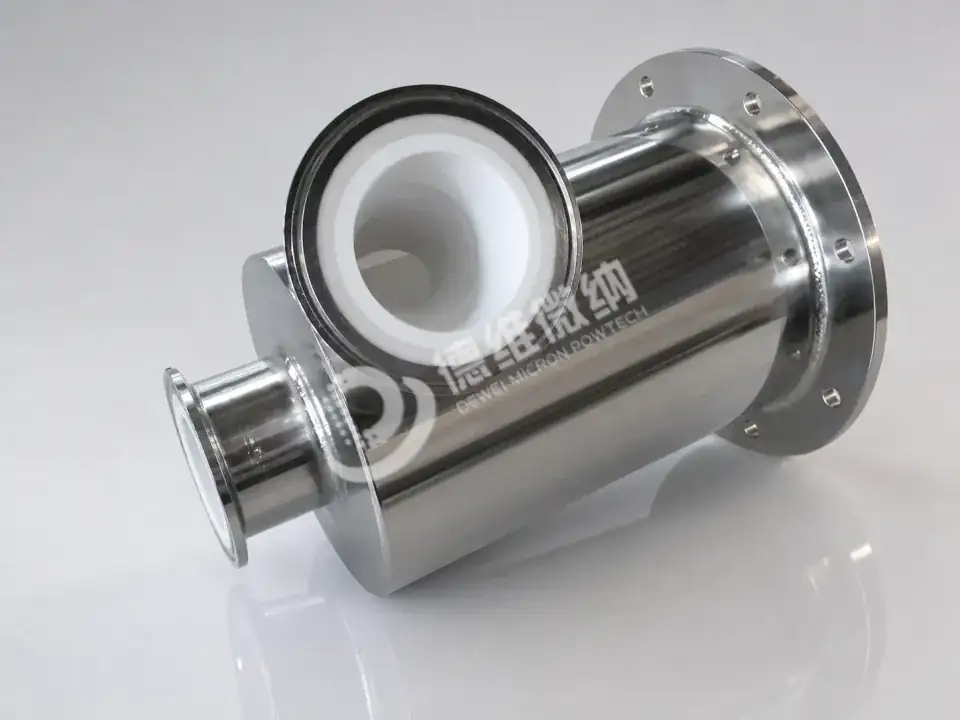
Ceramic-Lined Jet Mill
Evaluate this equipment as part of the complete ceramic & high-purity powders process.
View detailsCeramic & High-Purity Powders
Contact materials, wear, metallic pickup, stable classification, clean collection, and an agreed impurity test method are central to selection.
Contact materials, wear, metallic pickup, stable classification, clean collection, and an agreed impurity test method are central to selection.
We review the full route from feeding and milling through classification, collection, discharge, cleaning, and control. A product name alone is not enough for reliable selection.
These are starting points; the final combination follows sample data and the required production mode.
Evaluate this equipment as part of the complete ceramic & high-purity powders process.
View detailsEvaluate this equipment as part of the complete ceramic & high-purity powders process.
View detailsEvaluate this equipment as part of the complete ceramic & high-purity powders process.
View detailsMaterial name and chemistry, SDS, feed PSD, target D50/D90/D97, capacity, product-yield target, impurity limits, temperature limit, atmosphere requirements, and cleaning expectations.
Achievable PSD and coarse-particle control
Capacity trend and stable operating range
Temperature, buildup, wear, and collection
Contamination and safety boundaries
Representative sample testing can reduce selection uncertainty and provide a practical basis for pilot or production scale-up.
Scan to add WeChat
 Scan with your phone to start a chat